


Synthetic salts are built to dissolve cleanly, but chemistry still has rules. Cloudy mixes, white fallout, gritty residue, and clogged lines often come from mixing order, concentration, pH, water quality, or ingredients meeting each other before they are diluted.
Key Takeaways
- Nutrient precipitation is a chemical reaction where dissolved nutrients form solids.
- Precipitation is different from ordinary settling because the solids may not dissolve back into a useful form.
- Calcium, phosphates, sulfates, pH, water hardness, and mixing order are common factors.
- Never mix concentrated nutrients together unless the product label specifically says to.
- Add products one at a time into moving water, test after the mix is stable, and keep the tank clean.
A clear nutrient mix is not just nice to look at. It usually means the inputs are staying in solution and moving through the tank the way they should.
A cloudy mix, gritty fallout, or fine white dust at the bottom can mean something else is happening: nutrient precipitation.
This article is about chemistry-driven fallout. If you are dealing with heavy organic material, powder clumps, or ordinary solids dropping out because the tank is not moving enough, start with the sediment guide instead: Why Do Nutrients Settle at the Bottom of a Feed Tank?
For the larger tank-mixing strategy, use the Nutrient Mixing + Aeration Guide.
What Nutrient Precipitation Means
Nutrient precipitation happens when nutrients that were dissolved in water react and form solid particles.
Once that happens, those nutrients may no longer be available in the same way. They may collect as cloudiness, grit, scale, flakes, powder, or residue. They can also clog pumps, filters, lines, wands, emitters, and fittings.
Dissolved
Nutrients are in solution and can move evenly through the reservoir.
Settled
Physical particles sink because the tank lacks movement or the input is heavy.
Precipitated
Dissolved nutrients react chemically and form solids that may not dissolve back properly.
That difference matters. Settled material may be suspended again with better mixing. Precipitated material may represent nutrients that have chemically changed form.
Simple rule: if the solids form after products meet, think chemistry first.
Why Synthetic Salts Can Precipitate
Synthetic nutrient salts are designed to dissolve into ions in water. That is what makes them useful in hydroponic and feed-tank routines.
Problems start when certain ions meet under the wrong conditions. Some nutrients are not stable together in concentrated form. Some become less soluble when pH is out of range. Some react with minerals already present in the water.
Common triggers include:
- Mixing Part A and Part B together before dilution
- Adding calcium directly to sulfate-heavy or phosphate-heavy concentrates
- Adding products too quickly into too little water
- Mixing in the wrong order
- High pH
- Hard water or high alkalinity
- Over-concentrated stock solutions
- Cold water slowing dissolution
- Dirty tanks or old residue creating nucleation points for buildup
That is why many nutrient systems separate ingredients into multiple parts. They are not trying to annoy you with extra bottles. They are keeping incompatible ingredients apart until they are diluted enough to stay stable.
Precipitation vs. Cloudiness vs. Normal Mixing
Not every cloudy moment is a disaster.
Some products cloud temporarily as they disperse. Some dry nutrients take time to dissolve. Some tanks look slightly cloudy right after mixing and then clear as the solution stabilizes.
The warning sign is cloudiness that turns into solids, grit, film, or fallout.
| What You See | What It May Mean | What to Do |
|---|---|---|
| Temporary cloudiness that clears | Product may still be dispersing. | Keep mixing and test after the solution stabilizes. |
| Fine white haze that becomes grit | Possible precipitation. | Check mixing order, pH, water source, and product compatibility. |
| Powder on the bottom right after adding dry nutrients | May be poor dissolving or weak mixing. | Use the dry nutrient mixing routine. |
| Sludge, smell, or slick buildup | May be old residue, biofilm, or dirty equipment. | Clean the tank, hoses, pump, and fittings. |
| Scale on fittings or emitters | Mineral buildup or repeated precipitation. | Check source water, pH pattern, and maintenance routine. |
If the issue looks like powder clumps, read How to Mix Dry Nutrients So They Dissolve Evenly. If the issue comes with slime or smell, use the Cleaning 101 routine.
Mixing Order Is the First Line of Defense
The easiest way to avoid precipitation is to follow the product label.
That sounds obvious, but it is where many problems start. Nutrient lines are often designed around a specific order because some ingredients need to be fully diluted before others enter the tank.
A safe general routine looks like this:
- Fill the reservoir with the correct amount of water.
- Start mixing before adding products.
- Add the first product listed on the label.
- Let it fully disperse.
- Add the next product only after the first has mixed through.
- Repeat one product at a time.
- Check EC or PPM after the full recipe is mixed.
- Adjust pH last unless the label gives a different process.
- Retest after pH adjustment has circulated.
Do not shortcut the order. The tank may forgive you once. Chemistry may not.
Do Not Mix Concentrates Together
This is the big one.
Do not pour concentrated Part A and Part B together in a measuring cup, bucket, or small amount of water unless the product label specifically tells you to do that.
Multi-part nutrients often separate calcium from sulfates or phosphates because those ingredients can react in concentrated form. Once each part is diluted into the full reservoir volume, they are much more likely to stay stable.
Watch for:
- Instant cloudiness when two concentrates meet
- White flakes or grit
- A chalky film on the container
- Fine dust collecting after the mix sits
- Clogged filters or emitters after a new mixing habit
If that happens, stop repeating the same mixing order and check the label before making the next batch.
Watch Calcium, Phosphates, and Sulfates
Calcium is one of the usual suspects in precipitation issues because it can react with phosphate or sulfate under the wrong conditions.
This is why many two-part nutrient systems separate calcium-heavy ingredients from phosphate-heavy or sulfate-heavy ingredients until they are diluted in water.
Practical tips:
- Add each part separately into the full reservoir volume.
- Let the first part disperse before adding the next.
- Do not combine concentrated calcium products with phosphate or sulfate products.
- Avoid over-concentrated stock solutions unless the product is designed for that use.
- Use clean measuring tools so residue from one product does not contaminate another.
You do not need to become a chemist. You just need to stop forcing incompatible ingredients to meet before they are diluted.
pH Can Push Nutrients Out of Solution
pH affects nutrient solubility and availability. When pH gets too high or too low, some nutrients become less stable or less available in the solution.
High pH is especially important to watch when cloudiness, residue, or white fallout keeps showing up.
Better pH habits
- Mix the full nutrient recipe before final pH adjustment.
- Test pH after the solution has circulated.
- Adjust slowly instead of making large swings.
- Let pH adjusters mix through before retesting.
- Keep your meter clean and calibrated.
- Track whether precipitation appears after pH adjustment.
If pH changes every time you aerate or mix, do not chase one reading. Watch the pattern across batches and test after the solution is truly mixed.
For pH basics, use pH Basics for Nutrient Solutions.
Water Quality Can Make Precipitation Worse
Source water matters.
Hard water, high alkalinity, and mineral-heavy water can change how synthetic salts behave. If you keep seeing cloudiness or fallout even when your mixing order is correct, the water may be part of the problem.
Check:
- Starting EC or PPM
- Starting pH
- Alkalinity
- Hardness
- Municipal water report details
- Well water test results if you use a private source
This article is focused on precipitation, not a full hard-water breakdown. For that deeper water-source issue, use: Hard Water and Nutrient Mixing: What Growers Should Know.
Temperature and Concentration Matter Too
Cold water can slow dissolving. Over-concentrated mixes can make reactions more likely. Dirty containers can introduce residue that encourages solids to form.
To keep the mix more stable:
- Use the water temperature recommended by the product label.
- Avoid mixing powders or concentrates into too little water.
- Do not make stock solutions stronger than the product allows.
- Mix longer when water is cold.
- Use clean containers and measuring tools.
- Do not store mixed solution longer than recommended.
Stability is usually about reducing stress points: too concentrated, too fast, too cold, too dirty, or out of order.
How to Avoid Precipitation: Step-by-Step
Use this process as your clean baseline.
Before Mixing
- Start with a clean reservoir.
- Use clean measuring tools.
- Know your water source.
- Check starting pH and EC if precipitation has been a repeat issue.
- Confirm the nutrient label’s mixing order.
- Make sure you have enough water volume before adding products.
During Mixing
- Start water movement first.
- Add one product at a time.
- Never combine concentrates unless the label says to.
- Let each product disperse before adding the next.
- Watch for instant cloudiness, grit, or fallout.
- Mix longer in cold water or larger reservoirs.
After Mixing
- Check EC or PPM after the recipe is fully mixed.
- Adjust pH after the full mix is blended unless the label says otherwise.
- Adjust slowly.
- Retest after the adjustment circulates.
- Inspect the tank bottom before feeding.
- Flush lines after feeding if solids appeared.
What to Do If the Mix Turns Cloudy
Do not automatically feed a cloudy batch and hope it works out.
First, pause and look for the pattern.
| Cloudy Mix Pattern | Likely Cause | Next Move |
|---|---|---|
| Cloudiness appears when two products meet | Mixing order or concentrate compatibility problem. | Review label order and add products separately into more water. |
| Cloudiness appears after pH adjustment | pH swing or adjuster added too fast. | Adjust more slowly and let the tank circulate before retesting. |
| Fine white grit forms over time | Possible precipitation or hard-water interaction. | Check pH, alkalinity, hardness, and nutrient compatibility. |
| Powder sits at the bottom | Dry product did not dissolve evenly. | Use better dry nutrient mixing process and more bottom movement. |
| Cloudiness comes with smell or slime | Dirty tank, biofilm, or old residue. | Clean the tank, hoses, pump, and fittings before remixing. |
If you are not sure whether a cloudy batch is safe to feed, follow the nutrient manufacturer’s guidance. When the batch shows visible solids, clogged filters, odd smell, or major pH/EC behavior, it is usually smarter to stop and troubleshoot than push it through the system.
How to Keep Lines and Equipment Cleaner
Precipitation is not only a tank problem. Solids can move into hoses, pumps, filters, valves, and emitters.
If precipitation happened in the tank, assume the system needs cleanup.
- Flush hoses after feeding.
- Check pump intakes and screens.
- Inspect filters and emitters.
- Clean fittings, valves, and wands.
- Remove residue from the tank bottom.
- Do not let precipitated solids dry inside lines.
For the full system reset, use the Cleaning 101 checklist.
Common Mistakes That Cause Precipitation
Mixing A and B together before dilution
This is one of the fastest ways to create fallout. Add each part separately into the full reservoir volume.
Adding products too fast
Dumping nutrients into one spot can create high-concentration zones where reactions happen before the product disperses.
Adjusting pH too early
Adjusting before the nutrients are fully mixed can create extra swings and lead to repeated corrections.
Ignoring hard water
Mineral-heavy water can make precipitation more likely. If the same recipe behaves differently with different water, test the water source.
Using dirty containers or tools
Old residue can contaminate a fresh batch. Clean measuring cups, reservoirs, pumps, and hoses between uses.
Assuming all sediment is the same
Ordinary settling is often a movement issue. Precipitation is a chemistry issue. The fix is not always the same.
When Better Mixing Equipment Matters
Good mixing cannot fix incompatible chemistry, but it can reduce high-concentration pockets and help each product disperse before the next one enters the tank.
Better tank movement matters when:
- Products are being added to larger reservoirs.
- Dry salts take time to dissolve.
- Cloudiness appears where nutrients enter the tank.
- pH and EC readings vary by sample location.
- Residue collects near dead zones.
- You want a more repeatable mixing routine.
The goal is not to overpower the chemistry. The goal is to give the recipe the right conditions: clean water, correct order, steady dilution, and enough movement.
Need a more consistent mixing routine?
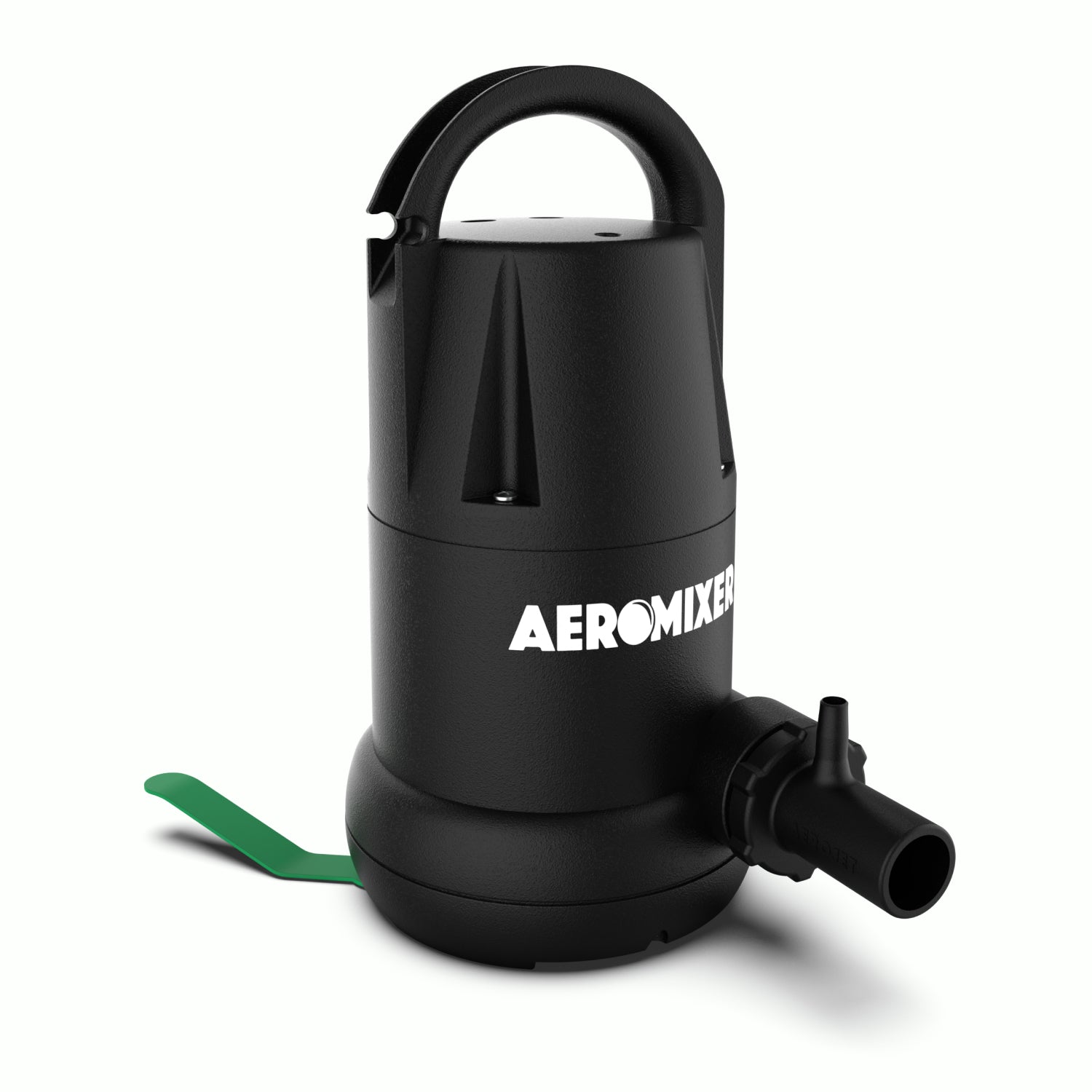
If your next step is better tank movement, the most relevant product hub is the Aeromixer hub. Aeromixer is built to mix + aerate feeding solutions with one pump, helping reduce dead zones while you follow the right nutrient order and testing process.
Explore the Mixers HubQuick FAQ
What is nutrient precipitation?
Nutrient precipitation happens when dissolved nutrients react and form solid particles. Those solids may appear as cloudiness, grit, flakes, powder, residue, or scale.
Is precipitation the same as nutrients settling?
No. Settling usually means physical particles dropped to the bottom. Precipitation means dissolved nutrients chemically formed solids. Better mixing may help settling, but it may not fix precipitation.
Why did my nutrient mix turn cloudy?
Cloudiness can come from temporary mixing, dry nutrients not dissolving, dirty equipment, pH adjustment, hard water, or nutrient precipitation. If cloudiness turns into grit or fallout, check mixing order and water quality.
Can I mix Part A and Part B together?
Do not mix concentrated parts together unless the label specifically says to. Add each part separately into the full reservoir volume and let each one disperse before adding the next.
Can high pH cause precipitation?
Yes. pH affects nutrient solubility and availability. If pH is too high or swings too fast, some nutrients may become less stable in solution.
How do I avoid precipitation with synthetic salts?
Use clean water, follow the label’s mixing order, add one product at a time, avoid mixing concentrates, monitor pH and EC, check water hardness, and keep the tank moving while products dilute.
The Takeaway
Synthetic salts can stay clean and stable when the routine respects the chemistry.
Fill the reservoir first. Start mixing. Add one product at a time. Keep concentrated parts separate. Watch calcium, phosphates, sulfates, pH, hard water, and dirty equipment. Test after the solution has fully mixed.
Cloudy mixes and fallout are not random. They are usually a clue that something in the order, concentration, water source, pH, or cleanup routine needs attention.
Keep learning with the full Nutrient Mixing + Aeration Guide, or build a stronger mixing routine with Aeromixer.